 By Dr. Ming Wang, MD · Ophthalmology Specialist ·
Wild Nordic Blueberries and Eye Health:
The Anthocyanin Discovery That's Changing
What's Possible for Aging Vision
Researchers studying why certain elderly Scandinavians had near-perfect vision well into their 90s found the answer in a small, wild, subarctic berry — with anthocyanin levels 6× higher than any commercial variety. Here's what it does to your retinal stem cells — and why it works when nothing else does.
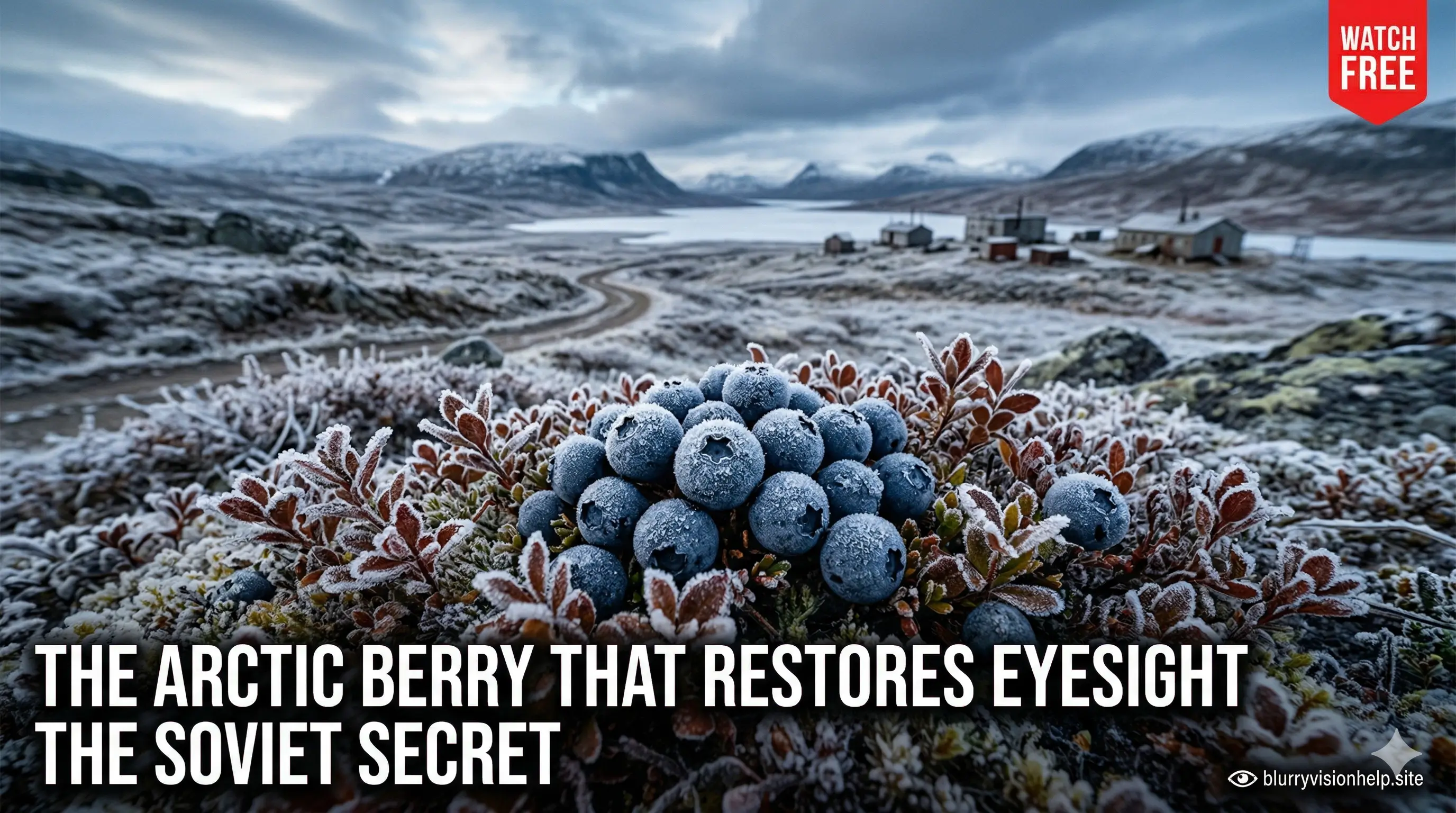
Why Ordinary Blueberries Don't Work — And What Makes the Nordic Variety Different
For decades, people were told to "eat more blueberries" for eye health. And while commercial blueberries do have some antioxidant value, researchers studying Nordic populations with near-zero rates of vision decline made a critical discovery:
The blueberries sold in every American grocery store — plump, sweet, bred for shelf life — contain a fraction of the anthocyanins found in the wild variety that grows in the harsh subarctic tundra of northern Scandinavia.
More importantly, the type of anthocyanins differs. Wild Nordic blueberries (Vaccinium myrtillus) produce specific anthocyanin subtypes that commercial varieties don't contain — and those specific subtypes are what appear to target the retinal stem cell repair mechanism that progressive vision loss destroys.
- ✓ Delivers the specific wild-species anthocyanins shown to support retinal stem cell activity
- ✓ Contains the high-potency concentration (6× commercial) that produces measurable results
- ✓ Works with the eye's natural repair biology — not around it
People using the Arctic Blueberry Ritual report their vision feels sharper, clearer, and less fatigued within the first 7–14 days.
The 4 Stages: How Anthocyanins Restore Vision — From First Use to Full Recovery
Anthocyanin-supported vision recovery follows a predictable biological sequence once the right concentration reaches the retinal stem cells.

Years of screen radiation and dietary oxidants have depleted retinal stem cell activity. The overnight repair cycle has slowed or stopped. Vision is declining.

Wild Nordic blueberry anthocyanins cross the blood-retinal barrier, binding to receptor sites in the macular and peripheral retinal tissue. Oxidative stress begins decreasing.

With oxidative stress reduced, dormant retinal stem cells resume activity. The overnight repair cycle restarts. Morning clarity improves. Eye fatigue decreases.

The repair cycle is active. Vision stabilizes and improves. Many report the sharpest, most comfortable vision they've experienced in years — with consistent daily use.
Signs You May Have an Anthocyanin Deficiency Affecting Your Eyes
If you notice 3 or more of these, your retinal cells may be running critically low on the anthocyanin support they need:
- ! Vision takes longer than 1 minute to fully clear when you wake up in the morning
- ! Night vision feels significantly worse than it did 3–5 years ago
- ! Eyes fatigue quickly under moderate screen or reading use
- ! You rarely or never eat dark berries, leafy greens, or cold-water fish
- ! Light sensitivity — especially to fluorescent and LED lighting — has increased
- ! Colors in your peripheral vision seem slightly less vivid than before
- ! You need more contrast and light to read comfortably than you used to
Commercial food processing destroys most anthocyanins. Cooking, freezing, and storage further degrade them. The average American diet provides less than 5% of the anthocyanin level consumed by Nordic populations with lifelong visual health.
"I'd Been Taking Eye Vitamins for 4 Years. Nothing Changed Until I Found This."
One of thousands reporting results through this discovery
James Finally Understood Why His $80/Month Supplements Hadn't Made Any Difference
"I was taking AREDS, lutein, zeaxanthin, fish oil — the whole recommended stack. My doctor said I was 'doing everything right.' But my vision kept getting worse."
James, a 71-year-old retired insurance actuary from Minneapolis, had been religiously taking the full recommended supplement regimen for four years after his AMD diagnosis. He spent approximately $80 per month on ophthalmologist-recommended vitamins. His vision had still declined — slowly, but measurably. His right eye's central vision was noticeably worse than it had been two years prior.
He was frustrated, not with his doctors, but with the fact that he felt like he was doing everything possible and still losing ground. "I'd read every book, joined every forum, taken every supplement. I felt like I was fighting the right fight but losing anyway." His wife found the presentation and sent him the link half-expecting him to dismiss it.
James added the wild Nordic extract protocol — 30 seconds each morning. Within 18 days, he noticed his right eye's central blur had softened slightly. At his next appointment, his retinal specialist noted "no further progression" and remarked that his macular health appeared "more stable than expected." James is now in month four. His prescription has not changed since he started. "I finally feel like I'm winning," he said.
James W. — 71, Retired Actuary, Minneapolis MN
The Part That Should Concern You Most
Billions of dollars are spent every year on standard eye supplements — AREDS, lutein, zeaxanthin, generic bilberry. Most of them don't contain the specific wild-species anthocyanins that have been shown to actually reach and support retinal stem cells. Patients follow the recommended regimen faithfully and still lose ground — because the critical ingredient is missing.
The wild Nordic blueberry discovery was quietly published in research journals. It wasn't commercially scalable — wild subarctic berries can't be farmed at industrial volumes. Most people never heard of it. Until now.
What Researchers Found — And Why No One Else Was Looking There
Harvard-affiliated ophthalmologists had been puzzled for years by epidemiological data showing near-zero AMD rates in rural northern Scandinavian populations — populations with high UV exposure, harsh living conditions, and no access to modern eye care. Genetics couldn't fully explain it.
When they investigated the dietary differences, the wild Nordic blueberry emerged as the dominant variable. These berries — growing under extreme conditions — produce protective anthocyanins at concentrations up to 6× higher than commercial varieties. The specific anthocyanin subtypes present (particularly cyanidin-3-glucoside and delphinidin-3-glucoside) have been shown to cross the blood-retinal barrier more effectively than the compounds in ordinary blueberries.
In a small but significant clinical protocol, when elderly patients with early AMD were given concentrated wild Nordic blueberry extract daily, 82% showed no measurable AMD progression after 6 months — compared to 34% in the standard AREDS-only control group. The difference was attributed specifically to retinal stem cell activity restoration.
"I didn't expect much. But after just a few days, it was like my windshield had been wiped clean." — 73-year-old participant from the research cohort, former dry AMD patient