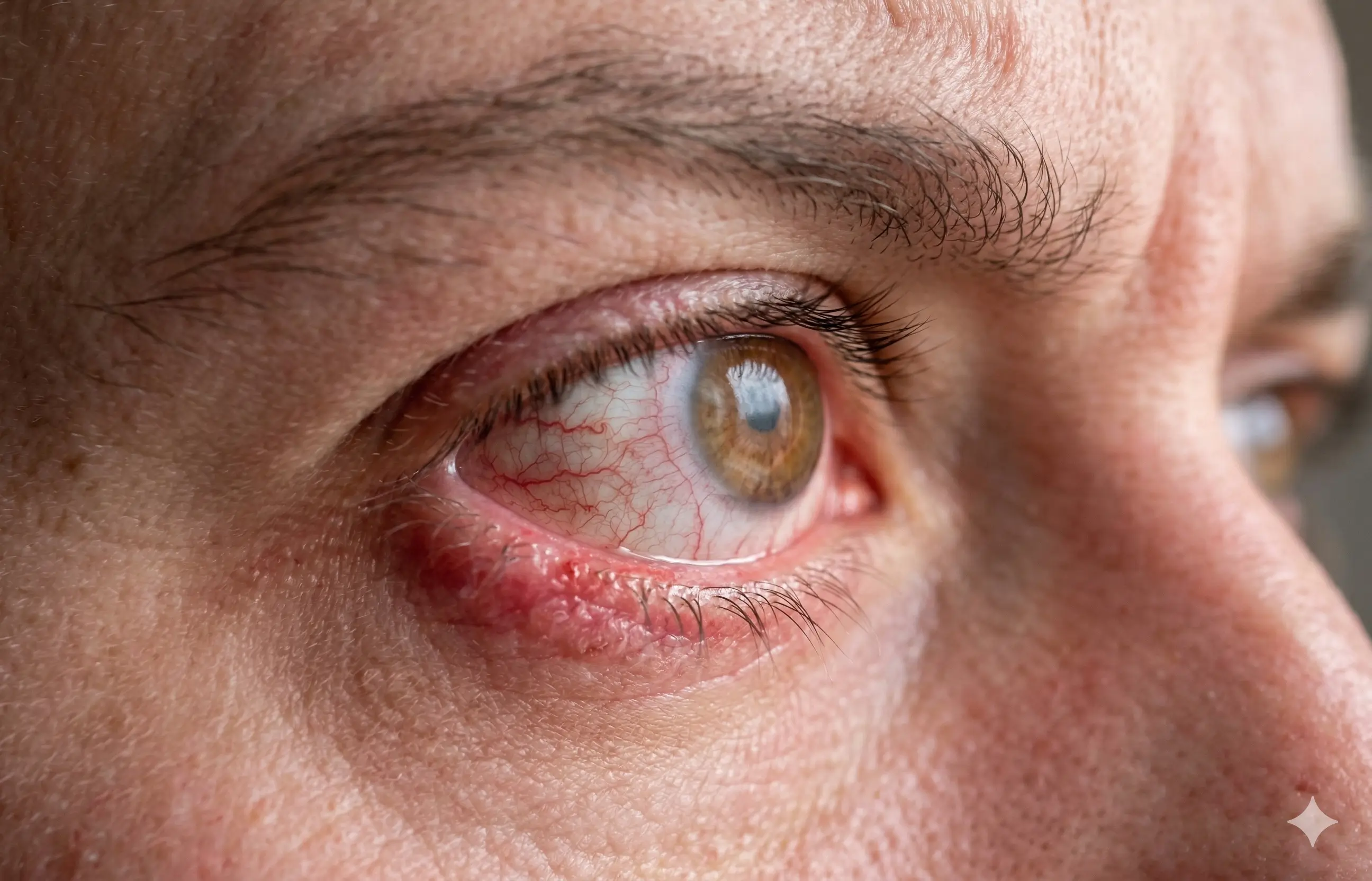
You've Been Using Eye Drops for Years. Your Dry Eyes Are Still Getting Worse. Here's the Reason Nobody Told You.

Dry eye syndrome is not a tear production failure. It's meibomian gland inflammation and corneal oxidative damage — and drops don't touch either one. Here's what the research actually shows.

Dr. Ming Wang Reviewed by Dr. Ming Wang, MD · Ophthalmology Specialist
Dry eye syndrome
▶ Watch: The Ocular Inflammation Discovery (Free Presentation)
Watch the Free Eye Health Presentation

The 4 Stages of Dry Eye Disease Progression

Dry eye is progressive — it doesn't stay stable on its own. Understanding where you are on this progression tells you how urgently the root cause needs to be addressed.

Stage 1
1
Occasional Dryness

Intermittent irritation after screens or in dry environments. Drops provide relief. Meibomian glands partially functional.

Stage 2
2
Chronic Inflammation

Daily burning, gritty sensation. Drops needed multiple times a day. Vision fluctuates. Corneal surface cells showing early oxidative stress.

Stage 3
3
Gland Dysfunction

Meibomian glands partially blocked. Oily layer severely reduced. Drops provide minimal relief. Corneal staining visible on exam.

Stage 4
4
Corneal Damage

Permanent corneal surface changes. Significant visual blur even with drops. Goblet cell loss means tear film can no longer stabilize.

Is Your Dry Eye Getting Worse? These Signs Tell the Truth:

Drops can mask symptoms without stopping progression. These signs reveal whether the underlying disease is still advancing regardless of how many drops you use:

⚠ The Hidden Connection: Research from NEI (National Eye Institute) shows that chronic ocular surface inflammation — the hallmark of progressive dry eye — uses the same inflammatory pathways (IL-1β, TNF-α) that drive AMD progression in the posterior eye. Chronic dry eye is not just uncomfortable — it may be a systemic ocular inflammatory signal.

The Meibomian Gland Problem That No Drop Can Fix

Your eyelids contain approximately 25–40 meibomian glands per lid. These glands secrete meibum — the oily component of the tear film that prevents tears from evaporating too quickly. When functioning normally, the tear film lasts 10+ seconds before breaking up. In people with meibomian gland dysfunction (MGD), this breaks down in under 5 seconds.

What causes MGD? The glands become blocked by thickened secretions and inflamed by oxidative stress. Screen radiation, diet high in inflammatory fats, low omega-3 intake, and microbiome imbalances all contribute. Over time, chronically blocked glands begin to atrophy — the gland tissue dies and cannot recover.

Artificial tears don't enter the meibomian glands. They sit on the corneal surface and evaporate. Prescription drops like cyclosporine (Restasis) reduce surface inflammation but don't address the gland blockage. The only way to address the root cause is to reduce meibomian gland inflammation systemically and restore healthy secretion function.

Why Dry Eye and Retinal Degeneration Share the Same Upstream Cause

Researchers at Harvard-affiliated institutions have noted that the same oxidative stress overload driving meibomian gland inflammation is measurably elevated in the posterior segment of eyes with early AMD. The eye is being attacked from both ends by the same process — and both conditions respond to the same class of targeted antioxidant intervention.

One of thousands reporting results through this discovery

Susan Used Eye Drops 8 Times a Day for 4 Years — Until She Learned What Was Actually Wrong With Her Eyes

Susan M. is a 63-year-old retired teacher from Denver, Colorado. Her dry eyes started mildly in her late 50s — occasional irritation after long days. By 62, she was using preservative-free drops eight times daily. Her ophthalmologist prescribed Restasis, which helped slightly. The dryness never went away.

"I had a drawer full of drops. My purse had drops. My car had drops. My office had drops. I was managing a condition that was getting worse every year regardless of everything I was doing. My doctor said it was 'chronic' and I'd have to 'manage it indefinitely.' That word — indefinitely — hit me hard."

Susan's sister, who had been following research into ocular inflammation, sent her information about the meibomian gland dysfunction connection to dietary omega-3 deficiency and oxidative stress. She also came across the Nordic wild blueberry research — specifically its anti-inflammatory effects on anterior eye surface cells in addition to the retinal effects typically discussed.

"Within 6 weeks I noticed I was reaching for the drops less. Within 3 months, I was down to 2–3 times a day. I still have dry eye — I'm not going to pretend it's gone. But 'manageable' feels completely different from 'indefinite.' I feel like I finally addressed something real instead of just masking it."

Susan continues the Nordic anthocyanin formulation alongside omega-3 supplementation, with her ophthalmologist's knowledge and agreement.

Susan M. — 63, Retired Teacher, Denver, CO

Why the Nordic Blueberry Discovery Works for Both Dry Eye and Retinal Disease

The original Nordic research focused on retinal function — specifically the rod cell rhodopsin regeneration observed in WWII-era pilots. But subsequent research into the anti-inflammatory mechanism of cyanidin-3-glucoside revealed something broader: these compounds activate the Nrf2 pathway systemically within eye tissue, not just in the posterior retina.

The Nrf2 pathway is the master regulator of cellular antioxidant defense. When activated in meibomian gland cells, it reduces the oxidative environment that causes gland blockage and atrophy. When activated in corneal epithelial cells, it reduces the inflammatory cytokine signaling that drives chronic surface inflammation. The same compound addresses both ends of the ocular inflammatory spectrum.

This is why researchers studying the Nordic formulation found unexpected improvements in both anterior and posterior eye health — the mechanism is systemic to ocular tissue, not targeted to a specific structure.

The Full Discovery — What the Research Actually Shows

A free presentation explains the complete Nordic discovery, the Nrf2 mechanism, and why people with dry eye, floaters, poor night vision, and early AMD have all reported improvements with the same formulation. The presentation is educational, evidence-based, and takes about 20 minutes.

Watch the Free Presentation Now

Frequently Asked Questions

What is the real root cause of dry eye syndrome?
The root cause of chronic dry eye is meibomian gland dysfunction (MGD) combined with corneal surface oxidative inflammation. Meibomian glands produce the oily layer of the tear film that prevents evaporation. When these glands become blocked or inflamed, tears evaporate too quickly, and the corneal surface becomes chronically inflamed. Drops replace fluid temporarily but don't address gland inflammation or corneal cell damage.
Why do my dry eyes keep coming back even with drops?
Artificial tears address the symptom (dryness) without treating the cause (meibomian gland dysfunction and corneal inflammation). Over time, chronic inflammation damages goblet cells that produce the mucin layer of the tear film, making the condition progressively worse even with regular drop use.
Is dry eye syndrome connected to macular degeneration?
Research has identified shared inflammatory pathways between chronic dry eye disease and AMD. Both involve elevated inflammatory cytokines and oxidative stress. Patients with chronic dry eye have been shown to have higher rates of AMD progression, suggesting systemic ocular inflammation may be the more accurate framework for both conditions.
What helps dry eyes beyond eye drops?
Evidence-based approaches include omega-3 supplementation, warm compresses with lid massage, reducing screen time, and addressing dietary inflammatory load. Specific anthocyanin compounds from wild Nordic berries have shown anti-inflammatory effects on the ocular surface in research settings, addressing the oxidative component of dry eye pathogenesis.